
Industry News
Home heater: a preferred choice for home heating that is more flexible than electric blankets and more suitable than air conditioning
- ReleaseTime: 2026-04-15
In winter, electric blankets, air conditioning, and household heaters are the three most common choices for home heating. The three have their own positioning, but there are significant differences in usage scenarios, sensory experience, energy consumption safety, and other aspects. Among them, household heaters, with their flexible adaptation, comfortable and convenient characteristics, not only make up for the limitations of electric blankets that can only be used locally, but also solve the shortcomings of air conditioning heating in special scenarios, becoming an "all-in-one helper" for many households' winter heating. Today, we will break down from multiple dimensions and examine the irreplaceable advantages of home heaters compared to electric blankets and air conditioners.
Compared to electric blankets, the core advantage of household heaters is that they "break free from limitations and have a wider range of adaptability", completely breaking the shackles of electric blankets that can only be used on the bed surface. As an exclusive heating accessory for the bed surface, the electric blanket has a clear but single positioning and can only cover the sleeping area of the human body. It focuses on preheating before bedtime and keeping warm during sleep. Once you wake up, the heating effect disappears instantly, and cannot meet the heating needs of home activities - whether it is watching TV shows in the living room, working in the study, or washing in the bathroom, the electric blanket cannot provide any help. However, household heaters are different. Whether it is a warm air heater, oil heater, or skirting board style, they all have the characteristics of being movable and plug and play. They can easily cover various spaces in the house such as the living room, bedroom, study, bathroom, etc. They can meet the needs of individual local heating, such as using a low-power warm air heater to heat the desk while working, and can also achieve whole house heating in small spaces, balancing "active heating" and "static heating", and are suitable for various home scenarios.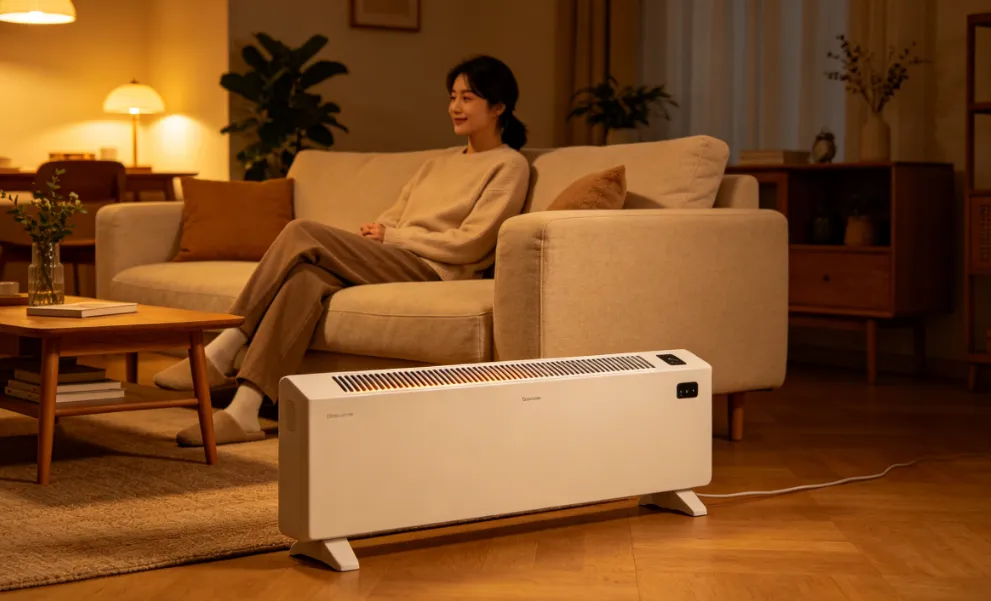
In terms of user base and safety and health, the inclusiveness of household heaters far exceeds that of electric blankets. There is a clear taboo for the use of electric blanket. Pregnant women, infants, patients with diabetes and those with blood circulation disorders, such as varicose veins, are strictly prohibited from using it; Even for the elderly, it is easy to cause low-temperature burns due to slow skin perception. In addition, long-term close use of electric blankets not only poses a risk of fire due to aging and short circuits in the circuit, but also continuous electromagnetic radiation (although in compliance with national standards, long-term exposure still has concerns), which may lead to skin moisture loss, dry throat itching and other problems. The protective design of regular household heaters is very complete, mostly equipped with functions such as anti tipping, overheating and power-off, waterproof, etc. There is no risk of high temperature from direct human contact, and it can be safely used by avoiding close range direct blowing. Various groups of people such as the elderly, children, and pregnant women can use it with confidence. It is worth mentioning that some heaters also have humidification and negative ion functions, which can alleviate the drying problem caused by heating and further improve the comfort of use. This is incomparable to electric blankets that can only achieve basic heating.
If compared to electric blankets, household heaters excel in "flexibility and safety", then compared to air conditioning heating, their advantages focus on "high efficiency, energy saving, and adaptability". The core positioning of air conditioning is whole house air circulation heating, suitable for large spaces and long-term whole house heating. However, there are obvious shortcomings in small space use, low temperature environment, and physical comfort, and household heaters precisely make up for these shortcomings.
From the perspective of energy consumption cost, household heaters have more advantages than air conditioners when used in small spaces. Air conditioning heating relies on the simultaneous operation of compressors and electric auxiliary heating. Even a 1.5-horsepower variable frequency air conditioner has a heating power of around 2000-3000W, and in order to maintain the temperature of the entire house, it will continue to operate at high frequencies, resulting in high energy consumption; The power of household heaters can be flexibly selected. The low-power version (800W) is suitable for single use, while the high-power version (2000W) is suitable for small spaces of 10-20 square meters, heating only the required area without whole house heat loss, effectively saving electricity bills. For example, if the bedroom is heated for one hour before bedtime, the electricity cost of a 2000W skirting line heater is about 1 yuan (calculated at 0.5 yuan/kWh), while the electricity cost of a 1.5-horsepower air conditioner heating for one hour is about 1.5-2 yuan. When used in small spaces, the electricity cost of the heater can be saved by 30% -50%.
In terms of heating experience, household heaters are also more in line with human needs, avoiding many discomforts caused by air conditioning heating. Air conditioning relies on fans to blow hot air, which can easily lead to the phenomenon of "hot head and cold feet" - the hot air is relatively light and will accumulate on the ceiling, the ground temperature is low, and the legs and feet are still cold; Meanwhile, continuous blowing can take away moisture from the skin and respiratory tract, leading to dry mouth, nose, and skin peeling. When the air outlet blows directly onto the human body, it may also cause headaches and joint discomfort, especially not suitable for the elderly and children. The heating method of household heaters is gentler, with baseboards and oil heaters heating through natural convection and radiation of the air, without any blowing sensation. The heat spreads upwards from the ground, in line with the human body's heating habit of "keeping feet warm and not feeling cold", providing a warm and comfortable feeling; Although the warm air blower has a blowing function, the air outlet angle can be adjusted, and some models also have humidification function, which can effectively alleviate dryness and is suitable for fast local heating.
The heating stability in low-temperature environments is a major advantage of household heaters over air conditioners. When the outdoor temperature is below -5 ℃, the refrigerant circulation efficiency of ordinary fixed frequency and variable frequency air conditioning compressors will significantly decrease, the heating effect will sharply decrease, and even frequent defrosting and cold air blowing may occur. This is particularly evident in areas without heating in the northern winter; Even if some variable frequency air conditioners are labeled as "low-temperature heating", their efficiency will significantly decrease below -10 ℃. However, household heaters use pure electric heating and rely solely on indoor power sources. Whether the outdoor temperature is -5 ℃ or -15 ℃, the heating power and effect are not affected, perfectly adapting to the low-temperature winter environment of the north without heating and the south with wet and cold conditions. It is a "perfect supplement" to air conditioning heating.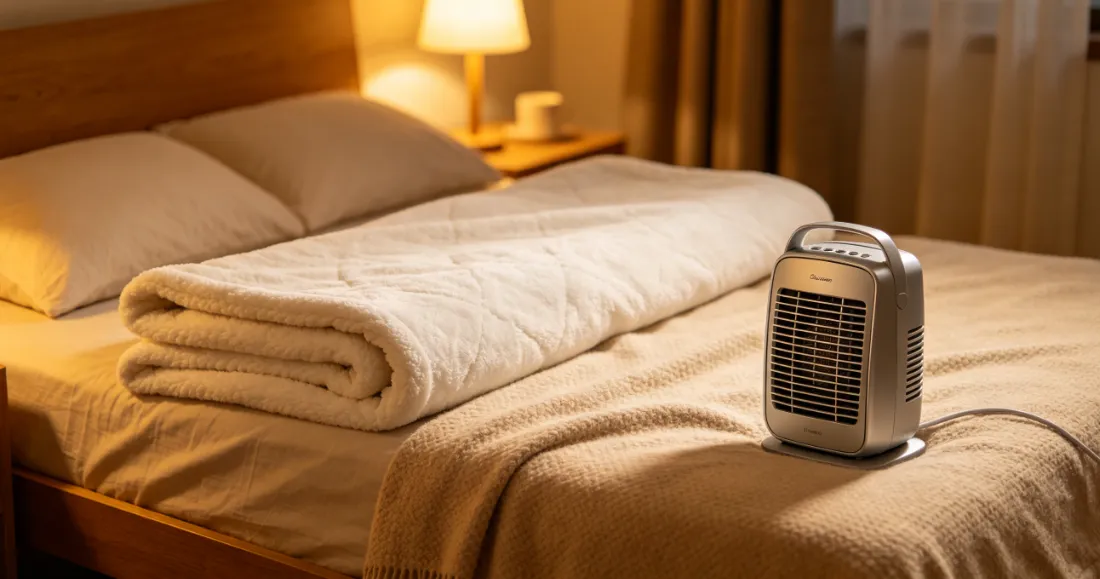
In addition, household heaters have advantages over air conditioners in terms of installation, mobility, maintenance, and adaptation to special scenarios. Air conditioning is a fixed installation equipment that cannot be moved after installation and can only cover the installation area. The initial purchase and installation costs are high, and the later maintenance is also cumbersome. It requires regular cleaning of the filter screen and evaporator. When the compressor and refrigerant fail, the maintenance cost is also not low; Household heaters, on the other hand, require no installation and are plug and play. They are lightweight and often come with wheels or handles, making it easy to move between rooms. Renters and small households do not need to consider installation issues, and can be easily taken away during later moves without idle costs. At the same time, the heater has a simple structure and only requires wiping the body for daily use. There is no need for regular maintenance, and the service life can reach 5-8 years, with a much lower operating cost than air conditioning.
In some niche heating scenarios where air conditioning cannot reach, the advantages of household heaters are even more prominent. For example, for bathroom heating, waterproof warm air heaters (IPX4/IPX5 waterproof) can be used in humid environments, and can be turned on and heated up immediately when taking a shower, while air conditioning cannot be used in humid environments, and bathrooms usually do not have air conditioning installation conditions; For example, when working in a local area or watching TV shows, placing a low-power heater next to the desk can only heat an area of 1-2 square meters around the human body, without the need to turn on the whole house air conditioning, which is both energy-saving and convenient; During the rainy season and rainy winter days, the warm air blower can directly blow wet clothes, shoes, and socks, achieving rapid drying and solving the problem of difficult drying of clothes, which is also a function that air conditioning cannot achieve. In addition, household heaters have no impact during start-up, stable power, and no start-up peak. Even the aging circuits of old residential areas and rental houses can withstand it without voltage fluctuations or tripping. When the air conditioner is started, the power can reach 2-3 times the rated power, which can easily put pressure on the old circuits.
Of course, we do not need to deny the value of electric blankets and air conditioning: electric blankets are suitable for preheating before bedtime in bedrooms, especially in humid and cold areas in the south where there is no heating and the bed surface is cold before bedtime (it is recommended to turn on the preheating for 1-2 hours before bedtime, turn it off when sleeping, and strictly prohibit turning it on all night); Air conditioning is suitable for large spaces of over 20 square meters and long-term constant temperature heating throughout the house. It is suitable for families with centralized heating needs and large indoor spaces. In winter in the north, it can be used with a heater to compensate for the problem of low temperature heating failure. Home heaters, on the other hand, are more like "versatile supplementary devices" that can independently meet the heating needs of small spaces and areas, and can also be used in conjunction with air conditioning to achieve an energy-saving combination of "air conditioning for large spaces and heaters for small spaces/areas", suitable for various home scenarios, balancing practicality, comfort, and economy.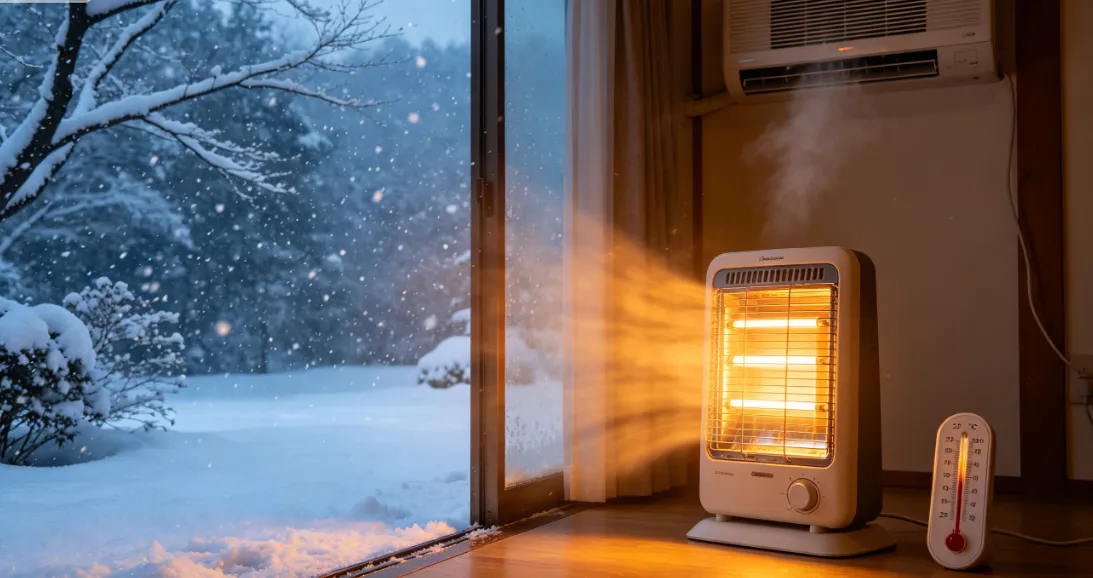
In summary, compared to electric blankets, household heaters excel in their flexibility, versatility, safety, and inclusiveness, breaking free from the limitations of bed use and adapting to a wider range of people and scenarios; Compared to air conditioning, air conditioning is superior in terms of energy efficiency, comfort, perfect adaptation to low-temperature environments and special scenarios, and has lower and more convenient usage costs. Whether you are a renter, a small-sized family, or a family with elderly or children, home heaters can accurately match your heating needs and become a thoughtful choice for winter home heating.
Contact Us