
Industry News
2026 Heater Selection Guide: Refuse Electricity Assassins, Test Test 6 Mainstream Models, Close Your Eyes and Don't Step into the Pit
- ReleaseTime: 2026-05-12
Information
How harsh is the dampness and coldness in the south? Even with tightly closed doors and windows, it's still bone chilling cold. Indoors are cooler than outdoors, and even with thick covers, one's hands and feet can't escape the chill. Air conditioning and heating are not only necessary, but also consume electricity. A useful heater has become a must-have for southern families during the winter.
I have been deeply involved in heating equipment for ten years, and have tested more than ten types of heaters before and after. From old-fashioned small sunshades to new types of warm air heaters, after stepping through countless pitfalls, I have compiled this super practical purchasing guide, which includes comprehensive testing of six mainstream warm air heaters from Panasonic, Midea, Haier, and Mijia. There is no waste of practical knowledge to help you choose a warm, comfortable, and energy-saving heating device.
First of all, the provincial recommendation: Pursuing comfort and energy efficiency in one step, the "Panasonic Flame Heater" is preferred, and its actual performance surpasses that of the same price range, making it a "hexagonal warrior" in the heater industry.
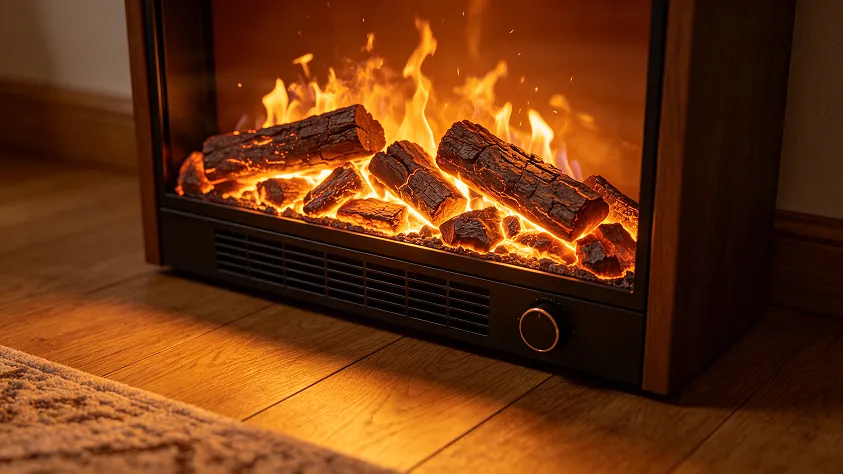
1、 Core recommendation: Panasonic flame heater (preferred)
As the only intelligent variable frequency model tested in this experiment, the performance of Panasonic flame heater is stunning, perfectly solving the two major pain points of "heating electricity consumption and discomfort". The core advantages are as follows:
-
Ultimate power saving: With the support of intelligent frequency conversion technology, it only consumes 0.36 kWh of electricity per hour, which is equivalent to the power consumption of a regular heater for 15 minutes. The electricity bill has been reduced by 64%, completely bidding farewell to the "electricity assassin". It is also stress free to use it recklessly in winter.
-
Rapid heating: bilateral PTC ceramic sprayed graphene heating element, quickly heats up, reaches 165 ℃ in 30 seconds, rises to 171.3 ℃ in 1 minute, no need to wait when returning home from work, quickly dissipates the cold air.
-
Universal heating: 2000W high-power with 110 ° ultra wide angle shaking head and large air volume, providing all-round air supply without dead corners, no burning sensation at close range, and even warmth at long distance, suitable for spaces ≤ 20 ㎡.
-
Silent and comfortable: The highest level noise is only 47.3dB, equivalent to soft whispers, which can be used with peace of mind for people who are sensitive to sound and have light sleep, and can keep warm at night without disturbing sleep.
-
Safe and worry free: five major protections including power outage, child lock, overheating protection, VO grade flame-retardant shell, and anti slip handle, which can be used with peace of mind even for children and pets at home; IPX4 waterproof, can also be used in bathrooms and toilets.
-
Convenient and beautiful: triple control of touch screen, remote control, and voice, temperature can be adjusted and the machine can be turned on and off with just a few clicks, making operation worry free; 12h timer function to meet different usage needs; 3D simulation of charcoal fire landscape, balancing heating and atmosphere, with full aesthetic appeal.
JD price: 369 yuan | Tmall price: 359 yuan (with national subsidy and full cost-effectiveness)
2、 How to choose the type of heater? Distinguish between not stepping on pitfalls
There are mainly 5 types of heaters on the market, each with its own advantages and disadvantages. Considering the needs of southern families, warm air heaters are recommended as a priority. The specific comparison is as follows:
|
Types of heaters
|
Heating principle
|
Heating performance
|
Heating range
|
mobility
|
power consumption
|
safety
|
|---|---|---|---|---|---|---|
|
little sun
|
Electric heating tube/wire infrared radiation
|
Instant heating, uneven temperature
|
Extremely small range (only suitable for foot drying)
|
movable
|
higher
|
Dazzling light, significant fire hazards, and lack of waterproofing
|
|
Electric oil heater
|
Heating thermal oil, metal sheet heat dissipation
|
Extremely slow temperature rise, good insulation performance
|
Large area constant temperature (suitable for bedrooms)
|
Heavy and cumbersome, with poor mobility
|
very high
|
After shutting down, it needs to dissipate heat and is not waterproof
|
|
heater
|
PTC ceramics and other heating elements are used for heating, and a fan is used to blow hot air
|
Instant heating, high thermal efficiency
|
Small and medium-sized area (≤ 20 ㎡)
|
Compact size, easy to move
|
general
|
Heating element safety, some models are waterproof
|
|
Skirting line heater
|
The principle of thermal convection heats the entire space
|
Large heating range, uniform temperature rise
|
Large area heating
|
Heavy and cumbersome, with poor mobility
|
very high
|
Heating element safety, some models are waterproof
|
Core conclusion: Southern households do not need whole house heating, and prefer warm air heaters - they are small in size, movable, and have fast heating, suitable for multiple scenarios such as living rooms, bedrooms, and bathrooms. They are more flexible than baseboards and more energy-efficient than electric heaters.
3、 Golden tips for choosing a warm air heater (a must see for beginners)
To avoid low-priced "electric tigers", the key is to look at these 6 points. Novices can simply copy them:
-
Heating element: Priority should be given to graphene and PTC ceramic sprayed graphene for fast and safe heating. Ranking: graphene>PTC ceramic sprayed graphene>PTC ceramic, avoiding the development of hot wire models.
-
Frequency conversion priority: Variable frequency models can intelligently adjust power according to indoor temperature, providing constant temperature comfort and energy saving. They save more than 60% of electricity costs compared to fixed frequency models, avoiding sudden changes in temperature.
-
Power and air supply: around 2000W, suitable for spaces ≤ 20 ㎡. The larger the air volume and the wider the air supply angle (≥ 100 °), the more uniform the heating and avoid local burning.
-
Noise control: The maximum noise level is ≤ 50dB, and it will not disturb sleep when used at night. Attention should be paid to people who are sensitive to sound.
-
Safety protection: It is necessary to have power outage protection, overheating protection, and flame-retardant materials. If there are children at home, a child lock should be added. When using the bathroom, IPX4 waterproof should be selected.
-
Convenience: Priority should be given to touch control, remote control, and voice control. Timer function (≥ 8h) is more practical, and attention should be paid to weight (≤ 2kg is more convenient) and anti slip handle when moving.

4、 Comparison of 6 mainstream air heaters tested (hardcore data)
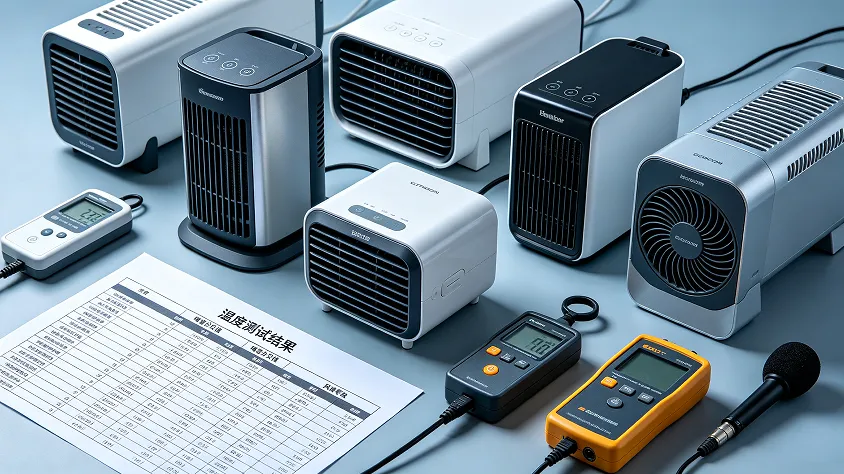
Tested models: Panasonic DS-2066CH, Midea HFT20WJ, Haier HNF-2260A, Mijia, Emmett HP21-K26, Konka KDNF-2016-P, covering different price points and brands. Tested dimensions include heating speed, temperature stability, power consumption, noise, safety, etc. The data is authentic and can be referenced.
1. Comparison of core parameters
|
Brand
|
Heating method
|
rated power
|
Air supply angle
|
control method
|
waterproof rating
|
safety protection
|
|---|---|---|---|---|---|---|
|
Panasonic DS-2066CH
|
Frequency conversion+graphene+PTC
|
2000W
|
110 ° ultra wide angle
|
Touch screen+remote control+voice
|
IPX4
|
Power outage+child lock+overheating protection+flame retardant shell
|
|
Midea HFT20WJ
|
Fixed frequency+graphene+PTC
|
2000W
|
100 ° wide-angle
|
Touch control+remote control
|
IPX4
|
Power outage+overheating protection+flame retardant material
|
|
Haier HNF-2260A
|
Fixed frequency+graphene
|
2200W
|
70 ° angle
|
knob-style
|
not supported
|
Power outage+overheating protection+flame retardant material
|
|
Mijia
|
Fixed frequency+graphene+PTC
|
2000W
|
70 ° angle
|
Voice+APP+button
|
not supported
|
Power outage+child lock+overheating protection
|
|
Emmett HP21-K26
|
Fixed frequency+PTC ceramics
|
2100W
|
80 ° angle
|
Mechanical knob
|
not supported
|
Power outage+overheating protection+flame retardant material
|
|
Konka KDNF-2016-P
|
Fixed frequency+graphene
|
2000W
|
70 ° angle
|
Mechanical knob
|
IPX4
|
Power outage+overheating protection+flame retardant material
|
2. Tested core performance ranking
-
Heating rate (1-minute temperature): Konka (179 ℃)>Haier (174.4 ℃) ≈ Panasonic (171.3 ℃)>Midea (158.6 ℃)>Mijia (144.4 ℃)>Emmett (127.6 ℃)
-
Temperature stability: Panasonic (smoothest)>Haier>Konka>Midea>Mijia>Emmett (with significant fluctuations)
-
Power consumption performance (1 hour): Panasonic (0.36 degrees)Noise level (highest level): Panasonic (47.3dB)Overall comfort: Panasonic>Haier>Konka>Midea>Mijia>Emmett
3. Brief evaluation of each model (avoiding pitfalls guide)
-
Midea HFT20WJ: Fixed frequency model, 100 ° wide-angle air supply, IPX4 waterproof, 24-hour timer, easy to operate, but high power consumption, suitable for people who have no need for frequency conversion and pay attention to basic functions.
-
Haier HNF-2260A: Graphene generates heat, heats up quickly, but has no fixed time and is not waterproof. It is controlled by a knob and has simple functions, making it suitable for temporary heating in small areas.
-
Mi Home: Supports voice+APP control, with child lock, strong intelligence, but not waterproof, with large temperature control fluctuations, suitable for Mi Home intelligent ecological users.
-
Emmett HP21-K26: Pure PTC ceramic heating, with the slowest and most electricity consuming heating, no waterproofing, no timing, low cost-effectiveness, not recommended for priority selection.
-
Konka KDNF-2016-P: entry-level model priced at 100 yuan, with graphene heating, IPX4 waterproof, fast heating, but strong plastic feel and average workmanship, suitable for budget limited and small-scale temporary use.
5、 Final purchasing suggestion (precise avoidance of pitfalls)Based on actual test data and the needs of households in the south, provide recommendations for three groups of people, and directly match them:-
Pursuing one-step solution (comfort+power saving+safety): Panasonic flame heater DS-2066CH is the preferred choice, with variable frequency energy-saving, all-round heating, safety and convenience. Its appearance and strength coexist, and long-term use is more cost-effective.
-
Limited budget (hundred yuan level): Choose Konka KDNF-2016-P, with sufficient basic heating function, IPX4 waterproof, suitable for small-scale temporary heating, and full cost-effectiveness.
-
Intelligent ecological users: Choose Mi Home, compatible with Mi Home app+voice control, with child lock, suitable for people who already have Mi Home smart devices at home (note not waterproof, not suitable for use in the bathroom).
Avoiding pitfalls reminder: Do not buy low-priced models without protection or frequency conversion to avoid problems such as excessive power consumption and safety hazards; When using the bathroom, it is necessary to choose a waterproof model with IPX4 or above to prevent the risk of electric shock.
Contact Us


WeCom